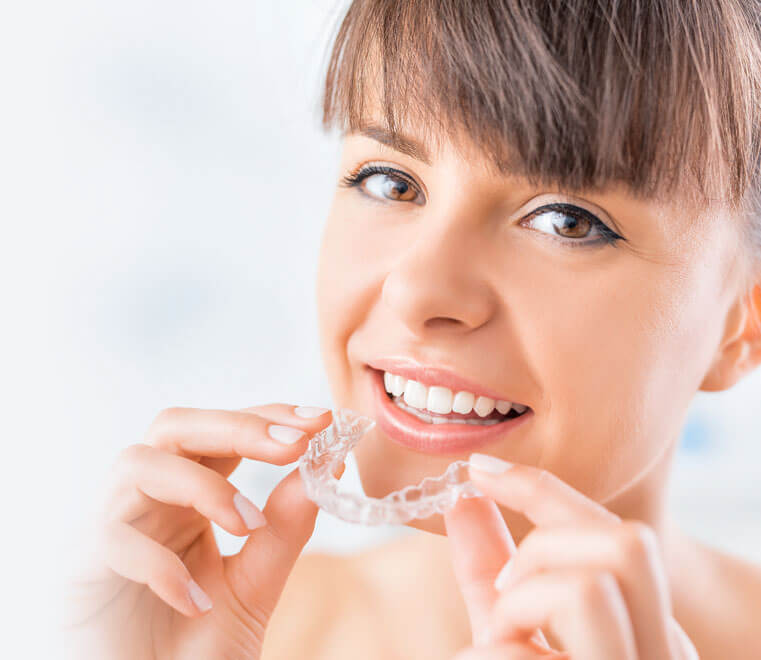
The Science Behind Transparent Orthodontics
The appeal of Invisalign Greenford lies fundamentally in its promise of discretion. Whilst traditional metal braces announce themselves prominently, modern orthodontic innovation has delivered a solution that operates in near-complete visual silence. The technology behind this invisibility is far more sophisticated than simply using clear plastic, involving precise material science and optical engineering that maintains aesthetic discretion throughout the entire treatment journey.
Understanding how these aligners maintain their transparency requires examining both the materials used and the manufacturing processes that preserve their optical properties. The remarkable achievement of Invisalign lies not merely in creating something clear, but in developing a system that remains practically undetectable even under close scrutiny and varied lighting conditions.
Advanced Material Composition
The foundation of Invisalign’s invisibility begins with SmartTrack material, a proprietary thermoplastic specifically engineered for orthodontic applications. Unlike conventional plastics that might yellow or become cloudy over time, this medical-grade polymer maintains its optical clarity throughout the typical two-week wear period of each aligner. The material’s refractive index closely matches that of saliva, which significantly reduces the visibility of the aligner edges when worn in the mouth.
Research into transparent dental aligner materials demonstrates how specific polymer formulations achieve superior clarity compared to earlier generations of clear aligners. The molecular structure prevents light scattering, which would otherwise create a frosted or milky appearance that draws attention to the appliance.
Precision Manufacturing Techniques
The manufacturing process plays an equally crucial role in maintaining invisibility. Each aligner is created using advanced 3D printing technology that ensures smooth surfaces without imperfections. Any microscopic irregularities would catch light differently, creating visible distortions or reflections that compromise the discrete appearance. The trimline of each aligner is precisely calculated to follow the gingival margins, ensuring that the edges remain hidden beneath the lip line during normal facial expressions.
Practices offering Invisalign utilise digital scanning technology that captures exact tooth contours, allowing for aligners that fit with minimal gaps between the plastic and tooth surface. This intimate fit eliminates air pockets that would otherwise create visible spaces or reflections.
Maintaining Clarity Throughout Treatment
The longevity of transparency depends significantly on proper care and maintenance protocols. Each aligner is designed to be worn for approximately two weeks before progressing to the next set in the sequence. This replacement schedule ensures that aligners are discarded before natural wear patterns can compromise their optical properties. The relatively short wear period prevents the accumulation of microscopic scratches or staining that would gradually increase visibility.
Clinical studies on clear aligner effectiveness and aesthetics have demonstrated that patient compliance with cleaning instructions directly correlates with sustained transparency. Rinsing aligners with lukewarm water and using appropriate cleaning solutions prevents the buildup of biofilm or discolouration that could make the appliances more noticeable.
Optical Properties in Different Lighting Conditions
One of the most impressive aspects of modern clear aligners is their ability to remain discrete across various lighting environments. Whether under fluorescent office lighting, natural daylight, or evening artificial illumination, the aligners maintain their near-invisible status. This consistency stems from the material’s uniform light transmission properties, which prevent the creation of shadows or highlights that would betray their presence.
The thickness of the material also contributes to this effect. At approximately 0.75 millimetres, the aligners are substantial enough to exert orthodontic force whilst remaining thin enough to avoid obvious visual bulk. Research published in dental medicine journals continues to explore how material thickness affects both clinical outcomes and aesthetic discretion.
The Result: Confidence Throughout Treatment
The culmination of these technological advances means that patients can undergo comprehensive orthodontic treatment without the self-consciousness traditionally associated with braces. The psychological benefit of this discretion cannot be overstated, particularly for adult patients in professional environments where appearance carries significant weight. The ability to straighten teeth without announcing the process to colleagues, clients, or social contacts represents a genuine advancement in orthodontic care.
The sustained invisibility throughout treatment duration ensures that patients maintain confidence from the first aligner to the final result, making the journey towards an improved smile as pleasant as the destination itself.